Transcript
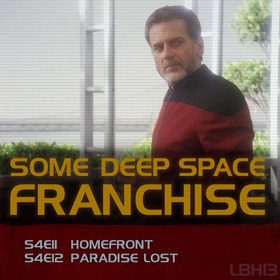
#13 – Some Deep Space Franchise (HOMEFRONT/PARADISE LOST)
Where's General Haig? General Haig is doing Deep Space Nine. It seems he was double booked by his agent and there's nothing to be done, so you'll have to do with me, sir. Back in the halcyon 1990s, a syndicated sci fi TV series warned us that it indeed can happen. Here in this podcast, we use Babylon 5 to talk through our current political moment in an attempt to process, understand, and perhaps find hope. Welcome everyone, to Last Best Hope. We're here today on the promenade of Deep Space Nine. Wait, this isn't where we usually record the show. We just did Severed Dreams and we were talking about General Haig and how he died, but I think we followed him through a wormhole. Oh, he ended up over here in Star Deep Space Nine. All right, well, let's follow the General to another universe and I think there'll be a lot to talk about here today. I agree. Yeah. This week we're a Star Trek Deep Space Nine podcast for our contribution to April Fool's Day. But there's a lot to tie into with Babylon 5. It's so interesting because as you heard, the actor who played General Haig in Babylon 5 was not available for Severed Dreams, the episode that we cast last week because he was on these two episodes of Deep Space Nine. So we thought it would be quite fitting to take a look at the episodes of Deep Space Nine that Robert Foxworth ditched Babylon 5 for, and the very interesting way that they cover similar territory but with certain important distinctions. And I'm excited to get into those. Yeah, I started watching it last night. One of the things about Star Trek is that it is so easy to just put on and watch. You know, you're not, you're not like, okay, let me, like, get into it or see if I have the patience for it tonight. You can just do it. And I saw a video the other day, something came up on my social media feed. It was somebody talking about, like, trying to clean their house, like starting the vacuum. Like, I'm just gonna put on Star Trek the Next Generation in the background. And the next clip is just them. Like they have the vacuum in their hand, but they're just standing in front of the TV staring at the episode and watching it. Because that's what happens. You're just drawn in, but it's effortless. And I think that's one of the great things about Star Trek is you just put it on and there you are, you're home again. You're in it. It's great. Well, you know, Something that I found pretty interesting watching this episode because I hadn't seen it in some years. And I don't know if this is just because it was a two parter, but I kind of really felt the rhythms of a narrative one hour TV script. You know, it's like, you know, it's like, oh, Grandpa Sisko has a heart attack. Oh no, it's gonna happen. Oh no, they think Captain Sisko's a changeling. Oh no. Like, what's gonna happen? Like, it was just the way that obstacles showed up was like clockwork, very much in the rhythm, this like very comfortable, familiar rhythm of a one hour episodic TV show. That was really striking because, not to say that there aren't certain episodes of Babylon 5 with a more sort of formulaic episodic structure, but just having watched Severed Dreams, you know, maybe it's not a fair comparison, but like, there was no sense in Severed Dreams of the shape of the narrative wasn't so clear. You were just sort of caught up in the emotion of the moment. And again, I don't think it's a fair comparison because, you know, this is an episode in the middle of a season of Star Trek and Severed Dreams is like the literal linchpin of the story that two and a half years of show had been leading up toward. So I don't think it's a straightforwardly fair comparison. But that was something that really struck me. And in particular the end of the second part, everything wrapped up so cleanly and so fast. Yeah, right. And I also love the idea that, you know, and again, I don't consider this a flaw. I actually think it was very thoughtful the way that when General Haig. I mean, Admiral Layton, when he knows the jig is up. Yeah. He has like a bit of a moment where the facade cracks, he gets angry, he raises his voice. And I think, you know, for a moment he realizes he's becoming unhinged. The way that he doesn't fight it, he voluntarily realizes it's over and he walks away. You know, just a very clean way. Everything sort of wrapped up. And again, very different kind of show. Star Trek, even the more serialized parts of Deep Space Nine, there was a sense that you had to reset everything at some point. And so even in a show such as Deep Space Nine, where they were moving toward and fighting for a more, you know, stories have consequences, you don't forget that it happened later on. Like the gravity of the episodic format was still there. Like, I was really shocked how they really wrapped up Everything so neatly and so quickly at the very end. And I was like, whoa, you guys just had a two part episode moving into some territory that Star Trek normally never goes to, or at least not this far. It's like you have an insane admiral or you have like, you know, Starfleet has been infiltrated by mind controlling parasites and stuff. And again like that's wrapped up in a number of parasites were supposed to be the precursor to the Borg. Yeah, I know, Crazy, right? Wild, wild story. Except for listeners, you know, like in Star Trek there's always a crazy admiral, even in the movies. Brock Peters, who plays Joseph Sisko, Captain Cisco's father in this, plays an admiral who is like a good admiral in Star Trek 4. In Star Trek 6 he's like, you know, an ideologue and sort of ends up as traitor as a result. Kind of like Admiral Layton in this episode, frankly. Yeah, very much. And that of course is actually before this, he played that role years before this episode. So it's kind of, it's funny to see the inversion there. Star Trek Insurrection, another like unhinged admiral. And I've seen commentary where they're just like, man, Starfleet. It just something fucks you up when you're promoted to admiral. Like Starfleet's just full of messy admirals and the captains who have to like fix everything that the admirals do. And I'm like, yeah, that's, that's Star Trek where they're sort of like in know, I guess they haven't dealt with like how to handle in Paradise Utopia, like what do you do with like superior, you know, officers? And the whole idea of this episode talks about the chain of command and everything. It's like, well, we'll just make the admirals who aren't on screen the problematic ones and the captains will be the heroes. Whereas there's definitely in Babylon 5. One thing I found about that show is the command structure was fascinating because they really, they did the same thing. Command chain of command and the importance of it. Which is why Severed Dreams is such a profound moment for Sheridan. But you see how messy that process really is in the show. And oh, you take an order from somebody in the military chain of command, but not from the political office and the machinations behind that which are very familiar to us. Star Trek is a little bit, you know, sanitizer there while preserving this naval formality in the chain of command and the ranks, minus of course all of the enlisted ranks that occasionally sort of like pop in there. But you know, the majority of military Service people are enlisted rank. Starfleet is all, you know, Ensign through, through. Through Admiral, which is why I think lower decks is so funny because you end up with, you know, all these ensigns all over the place and it's like, okay, how does that really work? So this, this is interesting to see how they just sort of did that. But to your point, quickness of how it wrapped up and Admiral Layton, I sort of said, well, you know, how that works thematically, is that he's still a Starfleet officer at his core. The programming, as somebody who grew up in the Federation and has the training that leads to the Starfleet officers we're familiar with. So his moral code is still much higher than, you know, or much more aligned with Federation ideals and that Roddenberry vision of humanity in the 23rd and 24th century. So I can sort of see that being like, you know, when he gets at, I will not give up. I have. I have my loyal officers. I will make a fight for it. And then, you know, he sort of breaks. So, yeah, you got to wrap it up. It's like any show of that era, but it sort of makes sense. Like, how far would he be willing to go once there was pushback or an indication that he couldn't go any further? How many lives did he sacrifice in his sort of egotistical desire? Because they did sort of frame it that, you know, he was confronted. It's like, this is going to be a dictatorship. It's not a dictatorship. How long is it going to last? 1 year? 2 years? 10 years? As long as it takes. And I think in Haig's, excuse me, Layton's face, you see that self questioning come in. And I imagine that was the actor's intent there. You know, Robert Foxworth did a great job, but I can sort of hand wave that part away and say like that. That fits for a Starfleet officer. This is what it is. And he wasn't a. A really important thing is an episode, is. It's episode two and they're realizing that there's a conspiracy at foot and Francisco's talking to Odo and they're saying, these aren't evil people. They are doing what they think is right. But the way they're talking about it, I mean, yes, that can be extended out to any soldier, but it can also be extended out to people who are just following orders as well, you know, and that leads you to Nuremberg, you know, that leads you to, you know, the most heinous actions of our history and people just following orders. So that was a tacit recognition of it. But it was also acknowledgment that these aren't mustache twirling villains. They're not meant to just be. They're bad guys because they're bad guys. And that's where sort of the idea of melodrama comes from. You just have a bad guy because they're a bad guy. And this is somebody who sort of lost their way but is also terrified of the Dominion threat. And I think that's the point is the terror and exploring that. And what was the date that this episode aired again? Was it 94? 95? January 1996? 96. Okay. Do you remember watching the episode by any chance? I actually have memory of watching it. I do. I have a very strong memory of watching it. I also remember very specifically the shot in the preview of the Defiant firing on an Excelsior class ship, you know, which as a 12 year old was very exciting because like, you also remember like back then the special effects shots, like those space combat shots were very expensive and time consuming to do. So whenever you saw one, you know, it was a real treat. Oh, and the Defiant like doing its maneuvers and actually one point you see it just like flips around and around and in maneuvers and it's because it was a smaller, more agile ship. But you're. We were sort of used to seeing, you know, the lumbering starships just firing their phasers each other and maybe doing like a little bit of a side to side maneuver and turning like, like a boat. And this was really sort of cool to see for that. I loved that scene and rewatching it brought all those same feelings back and I want to, I want to get to that in warf in, in a later part of our discussion because there's a lot of cool stuff to unpack there. I definitely remember watching this and because more specifically the episode Home from Part one, the first part of this because. Because it's taking place on Earth in San Francisco at Starfleet Headquarters. There are scenes in greenery and, you know, with trees and vegetation and with a lot of sun that stands out. So as a memory that in particular stands out. And I was watching it at my nana's house. We were having dinner together. We would often get together in those years and watch shows like Star Trek or X Files. He was a big fan of these types of shows and you know, and probably one of the many reasons why I am such a big fan and appreciate these shows. And I just remember, oh, this was one of the episodes we Watched So it's starting to be like yeah, I remember this. But I think it actually stands out as amongst the also peak Deep Space nine to go back because it was a, it was a well crafted episode from beginning to end, but both of them were. And it set up the world really well with the comments. That's something sometimes that you know, shows that can have trouble doing is let's take you to a different part of our world and not have to spend 20 minutes on exposition describing it. You know, very quickly having the Federation president have the side comment of basically he didn't even intend on running for that position until he was, you know, nominated by an associate in the Federation Council. And he's not human, he's not a human, but he's on Earth as president of the Federation and by extension actually in charge of Earth as well. And there's that one little line from Leighton that's like, well maybe he'd be more comfortable if he went home or. No, excuse me, I'll correct that it was more to the effect of like that he doesn't really, you know, this isn't his world, you know, and it wasn't really trying to blame him, but it was clearly an othering which is again those first steps towards a break of Federation ideals, towards the direction of fear and creating authoritarian systems and governments is all of a sudden, well, this person can't care about us as much because he's not like us. So he's not bad, but he's not one of us. And they were beginning that. And that's what happens with fear. You put fear out there and that is where I think human instinct takes us. And that's one of my big notes was that you know, President Clark identifies that and takes advantage of is using the shadows who he is tacitly allied with to strike fear into the Earth alliance and therefore justify his actions. And here we are today recording this episode and it's only a few days after we have made now in the US entered a war with Iran unexpectedly and with no. No clear reason, no clear objective. Shifting objectives, shifting reasons, no end point or real goal. And it makes you know, but the same stories being told. Well they were going to do this, they were going to do that and accurate or not, that's the game that's played is strike fear into people and you can carry out military actions without consequence. And the president in this of the Federation is incredibly resistant to that. So you know, home front starts with, you know, the, you know, it seems like it's Going to be a, you know, just a nice episode where Cisco gets to visit his family, gets to go back to Earth and see Earth. You know, it's under the backdrop of, you know, the changelings have managed to sabotage and blow up a diplomatic meeting. But the overall, you're still expecting it to be Star Trek. Oh, they're back on Earth. They're going to have to discover the bad guys. They're going to discover the changelings and do that. It's a little bit of a surprise that you're not. And then the President's reaction is very fitting. He's like, no, we're not going to give up. And he literally says the episode, you know, before paradise, Oscar, I'm not going to be known as the President who. Who loses paradise or destroys paradise and initially can't even conceive that would be the approach to secure Earth or the Federation. Well, something that I found very interesting, like a few things. I mean, you know, first off, this was written five years before 9 11. Yeah. And, you know, watching this, I remember I did rewatch it in the early 2000s. I did a big Star Trek rewatch. And I remember watching these episodes, rewatching them 10 years after they had been aired initially and just thinking, it's incredible that this wasn't made as a direct response to 9 11. Yeah. Because it seems like exactly the way Star Trek would or should handle that. Because obviously we know how Star Trek actually handled it, but. Which was season three of Star Trek Enterprise, you know, where Captain Archer justified the use of torture and all these, like, morally gray areas which felt like, you know, very serious. And. But that was in the Zeitgeist in 2003, 4, 5. You know, it was like the 24 ization of popular entertainment, which lasted for like a decade. Yeah. You know, hard men making hard choices. But this feels like more what Star Trek's reaction to 911 should have been. It's really striking to me because the writers writing this episode were not caught up in that post 911 hysteria. So they were able to sort of do this in this measured way. And the other thing, I don't know how intentional this was, you know, the way that they have these conversations about the implications and what it means in a certain way can come off to modern ears as like a little, you know, naive or on the nose. And if you think about it, these people are centuries removed from a culture that handled these sorts of situations directly. Right. So it is centuries outside of their collective shared experience. So you have someone like an Admiral Layton, he doesn't even really fully realize the implications of what he's doing until Sisko points out the very obvious blind spots in his thinking. And what's interesting is that they actually get through to him. And I think he has a moment where he actually is genuinely questioning himself, you know, and as you said, I think he is at his core a Starfleet officer with principles. And I think he arrived at this plan honestly in scare quotes. And by that I mean he's not a power hungry guy. Right. But he's confronted with this terrifying situation that Starfleet and the Federation haven't had to really confront threat on an existential level. And that fear makes him go to extreme places in a like organic human progression that he would be less aware of how, like how classically he's following the authoritarian playbook. Yeah. Which I found very interesting. You know, once again, I don't know that was necessarily the intention here, but I think the combination of what TV was capable of in terms of nuance and complexity at the time combined with where we were in our history, we were in the 90s, 9, 11, hadn't happened yet. So you sort of have to make these things clear and explicit for the audience. That's so interesting because when you pinpoint this as 1996, we're sort of at the height of the US being the sole superpower. I believe that's before the US intervened in Kosovo. I think that's. I think that's 97. I thought that was 95, but I could be wrong. You may be right. I'm actually going to verify that right now because that's a very important distinction. Right. Oh, no, I'm sorry, it was 1999. 99, yeah. So I was still a little bit early in that. I remember roughly in my life when it was. That's why I thought it was a little bit later. And I'm like, yeah, that was. And that was. It ended up being an overstep in terms of international politics. But before 99 were coming off the heels of the fall of the Soviet Union and what was known as the Immaculate War of the first Gulf War, Operation Desert Shield, turning the Desert Storm, where it was a unquestionable victory. Maybe not it didn't go as far as George W. Bush wanted, but it was the exact objectives of George H.W. bush. And we were riding high, like really riding high. So this episode is not informed in the zeitgeist of any sense of feeling down about ourselves or even necessarily afraid of the future, which is why it's so interesting. It follows the playbook. Not only would it have been an interesting response to 9 11, it telegraphs what 911 really is about and the sense of. And from that perspective, what I'm talking about is the changelings are not assumed to have a lot of people on the planet, then reveal to Cisco in the second episode. It's like, how many gfs do you guess are here in the form of Chief o' Brien, who gets to. I love that scene, by the way. Oh, such a good scene. He gets to chew the scenery as a more accentuated version of o' Brien and the laugh and everything. I love that scene. And he says, how many of us do you think there are? What would you say if I told you that there are only four of us and we were able to sow this much discord? And that's the point, to bring it into the real world, which is sort of what this show is about for us. 911 is one of the most horrific incidents in US history. But the goal was not the death toll of that day by itself. That was a chess piece to le Actually, it was a domino piece to lead to a cascade that would have the people of the US Doubting themselves, doubting their ideals, dating, doubting their values and imploding upon themselves. That is the documented tactical reason behind the terrorists who carried out that action, carry out this action, trigger a civilization fall. It wasn't about having more weapons. It wasn't about having more destructive capability. It was about causing a civilization to doubt itself and most importantly, to turn on itself in fear and say, wait, are you with us? Your guess is, are you one of them? We have to lose all of our rights. We have to lose our Constitution. We have to lose the Bill of Rights. All to stay safe. And the reality is that was one attack. One attack led to the Department of Homeland Security. It led to countless acts that restrict. That led to mass surveillance. One of the more inconvenient, obvious things that we all deal with is the TSA and some of the, you know, clearly arbitrary and silly rules that don't crazy but led to the phrase security theater. You know, so that's really the goal of actions like that. And portraying this in 1996, we knew that writers knew that human beings. We knew that tactic. But even when it comes up in our face, and that's what Admiral Layton is facing, this is their intent. They're not there to go and do what he did, which is to sabotage the power grid of Earth. They're there to make the solids, as they call all the members of the Federation, doubt themselves. And that is their greatest tool. And that's the storyline that really comes through in this episode, is that you cannot give up. And even when the President, you know, is led down that path moment by moment and then is strong armed into it, and then still that's not enough for Layton. He's going to basically have to initiate a coup because it's, It'll never be enough. And that's what Cisco is identified. It will never be enough. The fear will always come back and all the changes will have to do is, is poke at that fear another time and have to wait for the Federation to destroy itself. Now this is Star Trek episodic tv. They wrap it up and the Federation holds. But the writers kept that going throughout the later seasons as the Dominion War escalates. And it's a constant challenge of values, you know, what does the Federation become? It's an interesting story to explain it, to see it carry out through throughout this series was almost painful watching the series in later years because you're thinking, but this is Star Trek. Roddenberry has is, you know, deceased five years at this point when this episode airs and, or almost five years. And you think, you know, this would not have been his. Star Trek Deep Space Nine is the furthest, I think, from what Roddenberry would have approved of. But it's also one of the most compelling Star Treks because it does return us to the ideals and in some ways they, you know, I try to stay away from the debate about who was copying who. We have JMS's autobiography, where he now has more information about what happened all these years later, how many of the ideas were taken. But I really do think, you know, watching the documentaries on the writers, you know, is it Ira, Steven Behr and Ron Moore is involved. You know, they had their own stories they wanted to tell, their own inspiration, and they did an expert job at it. I, I really think that both these shows have an important place and a fun place in sci fi fandom for jms. I think it sucks that they probably took the core principle and maybe the studios rip that off and, you know, set the writers on the task of writing this show. But I think that it gives us two perspectives on a war of that level. And that's why this is such a fun episode for us to record here, because here we are, not only with some parallels, but also different perspectives on how the writers are gonna handle this. But this actor, to have him go from show to show at the same time. We talked about this. But when Robert Foxworth is not available to play General Haig because he's playing Admiral Layton on Deep Space. Playing Admiral Layton. And I'm watching this episode and I'm thinking, man, they not only got it, but, like, did the writers and casters know? Like, oh, we want to get him for this? Because they inverted his character. They literally took General Hagen. This is what I was thinking about was in both shows, he's going against the president. Literally the president of that show, this universe. And in one, he is. He's. I mean, Obviously in Babylon 5, General Haig is afraid of what Clark is doing but he is standing up for his values. And he was working with Sheridan from the beginning of Sheridan's introduction to root out what he was beginning to sniff out as a conspiracy to overthrow the Earth alliance and to sacrifice its ideals. So he's in the role, in some ways, of Captain Sisko in Deep Space 9 in these two episodes. But in the end, has to, you know, stand up to the president has to defy and then turn against the Earth alliance in a complete act of rebellion. Gets the ships and he has people who are cheering him on and has allies in Babylon 5. Has allies across the Earth Alliance. And it's so interesting, because I was thinking of this while watching it that this is General Haig tweaked to the other side which gives you perspective into, like, well, how the other. Because here he is the same thing. He wants to save the Federation. Adam Layton wants to make sure the Federation is secure and safe and go on doing its thing. But he rebels against the president but does it in favor of a more authoritarian route. Now, I think that the major difference in terms of how this was going to play out is that President Clark is an authoritarian for his own sake. Grandiosity and the fact that he lives in fear of the aliens. Fear of anybody and everybody. And that is what the shadows and what the PSiCorps are enhancing and provoking in Clark and his followers. So you're right. Admiral Leighton is still a Starfleet officer. He became vulnerable to that. And when he loses, he sort of turns around and resigns and surrenders. It's so interesting to see how that played out. But I wonder if they were having fun with that idea of, like, let's take Robert and. And get a great performance out of this great actor but cast him in the opposite role as what he is in Babylon 5. Was it, like, some competitiveness? Yeah. I mean, look, I'm as certain as I can be that the writers of Deep Space Nine had no information, no idea what Babylon 5 was doing or was planning to do. And I think a lot of the similarities are just coincidence because, you know, you were all floating in the same soup, the same zeitgeist. We're seeing the same things. We're, you know, we're living in the same world. And those things, you know, marinate. And especially when you're writing for a show that has a very similar premise, it just sort of follows. Makes sense that you would arrive at similar story points. The casting of Robert Foxworth, you know, Hollywood is a very small town. And in 1995, 96, when you wanted an actor to play a part like this, Robert Foxworth was like at the top of that list. And I'm sure Star Trek had more money to pay and it was a two part episode, so he was getting paid for two episodes. And it's interesting too, because, you know, again, watching Babylon 5 in syndication could be spotty. So if you missed an episode, you may have missed something that you didn't realize was significant. And also something that I don't think I really realized until I rewatched Babylon 5 when I got older, like after all of the DVD sets were out. And that was something you could do, right? I was surprised. The significance of General Hay from the beginning of the second season, like he, he really was central to Sheridan's story and the Earth alliance story. And had Robert Foxworth been available for Severed Dreams and played General Haig in that episode, as was the plan, you could imagine he would have showed up more, you know, and had a more defined and significant and memorable character arc. But what ended up happening because he wasn't available for, you know, the consummation of his whole narrative arc, the character was dropped. And that whole, all of that laying the foundation of like him showing up in certain episodes and having secret meetings with Sheridan and all this stuff, like all that stuff was just dropped to, to the point where I had totally forgotten all about it, you know, and obviously if you're jms, it's like, I can't believe this guy isn't available. I've been seating all this stuff for so long and he's not available. So I can't realize the culmination of this character's arc. But he was smart enough to realize that he didn't actually need to. We see the result of it, but we forget how central that character personified was supposed to be in that story. And Jamis is a master and intentionally does this. I guess he understood these possibilities as a reality of television production. So I know the main characters. He built in so many trapdoors built in alternate, even if they were not what he wanted originally. He adapted. And there are numerous course corrections throughout the series. Obviously Michael Hair being the first major one. But then getting a fifth season after not getting a fifth season, you know, is another major one. And this was an interesting course correction that really like it still, it worked as well as having General Haig there. It's like he was killed midship. What happens next? Well, it gives you. It almost makes you despair, but it gives you. It communicates the gravity of the situation. And that was one thing the show always had. And it carried over. I just want to quickly jump back because maybe we'll do an episode on it. But when you said, like in syndication, if you missed an episode, you know, and you couldn't get back to it, Star Trek was in syndication, was in repeats a lot more. But I remember I would still have to plan summers, like, okay, get the VCR or make sure I'm home that night for the episode I missed. And in a serialized TV show like Next Generation, it wasn't necessarily a big deal. You know, it's like, oh, man, I missed that cool episode. Maybe like, you didn't want to miss Best of Both Worlds part one or two, but other than. Other than those episodes, if you missed one, it was like, oh, man, that would have been cool. Babylon 5 is not the same. And I don't know if you remember, but back in the day when we were discussing this and there we were all talking about this show and I forget who it was. Who had seen the. Was telling me about Kasha's big reveal at the end of season two. I never saw the episode. I missed it completely. I'd watched every episode of Babylon 5 and including the Inquisitor episode. That was the one right before this, for whatever reason, did not get to see the finale of season two and couldn't see it for years later. And people told me what happened. I just remember interacting. People saying, this happened. I couldn't believe it. It was the best episode I've ever seen. And it was so important to the story that mythos why characters were doing what they were doing. Nope, I didn't see it. I had to rely on others sort of relaying it to me. And you could get away with that in Deep Space Nine, but less so in the later season. Later seasons, you really wanted to stay on board. And this episode I was reading on Memory Alpha that this was actually intended to be the finale and a two parter cliffhanger finale of season three and going into season four. And the studio didn't want a cliffhanger for that one. They also, you know, gave the direction to shake the show up leading to the beginning of season four, having the Klingon invasion of Cardassia and then the Deep Space Nine battle scene, which is one of the best, you know, battle scenes in all of Star Trek, and really did shake up the show and really did get, you know, gave us Worf and gave us a new direction to go in. And that's what I want to jump into is Wharf in this episode. In the second part. I really thought it was interesting how they portray Worf on the Defiant. So, you know, they're coming in with the evidence of what Layton has done, how they were triggering the wormhole and Layton figured it out and was going to have the Lakota intercept them. So Lakota fires a little bit reminiscent of Star Trek ii. But in that case, Worf was not going to be caught with his britches down, as Kirk would have said. You know, shields were up immediately. He was the picture the paragon of self discipline. We want to say, well, Klingons just want to go into battle. They just want to go into bloodlust. Well, we've also seen the interpretation of Klingons as they are master warriors, which means you have to know when to fight and wait for the right moment as well. So instead of portraying Warf as like, I'm sitting here just waiting to bust out and fight. He was disciplined and methodical, but not in conflict with himself. Again, this is Michael Dorn's brilliant performances throughout Star Trek. And I think he's the most, the actor has the most episodes across all of Star Trek because of Deep Space Nine and Next Generation. And he's disappointed and frustrated that the Lakota is firing on them. But then when they realize, you know, but then takes the gloves off, doesn't enjoy doing it, but does it, you know, and because they're all looking at him and he says, so what do we do? Cavity says, we fight. And they zoom in on him in that scene. And I thought that, you know, that just, that works for Worf's character. You know. You know what's really interesting about that observation, I think it's the very next episode actually is the episode where Worf is court martialed because he's accused of, he was in command of the Defiant. He's accused of firing on a ship I forget the exact situation, but the point is he used excessive force and he destroyed a ship. And the episode is a trial questioning his command decisions. And the prosecutor is, is a Klingon and he is trying to goad Wharf and trying to frame him as this bloodthirsty Klingon. I think the episode is called Crossfire, which uses a really interesting, just visual devices and aside, like it's a courtroom show, which, you know, visually is tricky because it's a bunch of people, you know, sitting in a room. So when the characters give their testimony, the way that they shoot it is they shoot it on the bridge of the Defiant as if they're in the situation, but the character addresses the camera saying their courtroom testimony. So it's this creative way of, you know, making the courtroom drama a little more exciting, you know, cinematic and visually interesting. It's not a great episode. It's just an interesting little, little thing. Yeah, but you saying that the show had a closer examination of that, like right around interesting, sort of in the mind of that. What is it coming on? And again, different writers for different episodes have different takes on that as opposed to a unified executive producer and writer of most of the episodes in jms. But it really was something. I enjoyed seeing Worf do that because it also just, it fits with how they portray in the third season of Picard when he's like what I call he. He's the Paragon Wharf. He is, he's the enlightened warrior, you know. And I gone back and watched that recently and I thought, oh God, I just love everything Michael Dorn does in this, in, in this show. So he gets his little bit in this two parter and really gets to do well. And that's the scene where again it's where are your Starfleet values? Which is the debate around this episode. Babylon 5 is less about where are your values in terms of, you know, a Starfleet ideal than what is the bigger picture and why aren't people, you know, how do we handle people doing that? Sheridan talks about his ideals a lot, but it's. It doesn't seem to be the dominant discussion because the show isn't about that Earth has these superior ideals that they have to uphold. It's about the journey of these human characters having to come to realizations versus simply say, you know, revert back to their already enlightened status. And this is what, again, Admiral Leighton is sort of giving up his pursuit and reverting back to a arguably higher status or mindset than what he let himself be Brought down to by the changelings in Babylon 5. It's the journey of Jakkar becoming more than he was. It's the journey of Delenn exploring humanity to what had become a fairly, you know, closed off mentality amongst men. Pari the Centauri, the going. But only realizing at the very end he just had made every wrong decision and has to sacrifice himself. All these characters are growing and becoming and taking different paths. Star Trek is very much like, well, we establish what they are like. This is the Federation. We've already hit this point and these things will take us away from that. This is called Paradise Lost, not Paradise Achieved. And that's the fundamentally different angle that these shows take. But they get to explore the same way quickly. I want to jump in on something that of course I noticed immediately, which was the captain of Lakota and assistant to Leighton here is. She's Leah Brahms. Leah Brahms, it's an actor. She plays two characters in the show. And it's so funny to see because initially I'm like, wait, that was. Yeah, that was. That's. That is. You know, Susan Gibney plays two roles, very different roles in this show, but gets a similar, gets to do a similar thing of like a Starfleet officer doing what she thinks, right? Being very loyal to a commanding officer who's. Who has quite a storied record and has been extremely, a good, extremely good mentor to the officers under his command and makes that decision in the end not to fire the quantum torpedo to blow up the Defiant. The same way the Defiant under Worf does not take the final step to, to blow them out of the water because they see, oh, Lakota's powered down their weapons and again, there's worth. Not like, well, we still have to just take him out. It was. Okay, let's talk. I liked what she did in this because she seems almost regretful. Like all the characters as part of this conspiracy all they all fit very well. The, the overeager, really annoying Red Squadron officer who Cisco calls in to interrogate and sort of get the crux of the conspiracy from and manipulates him. And what I thought was a great way, oh, he's literally that like overachieving guy that we've all met in college. We all know that person and they clearly got this young actor and they're like, listen, we want you to play this annoying role to the Nine. And he did it really well. And yeah, there's, there are all these officers, the young ones especially like, yeah, we're going to carry out this Thing because we're serving the Federation, we're going to make everybody safer. There were two things about this episode that I thought hit things that B5 never really got into, one of which I thought it was a very savvy move to feature the Cadets Red Squad as being central to the execution of this conspiracy. Because that. That indoctrination of the youth is a key component of how authoritarian regimes are able to succeed and have any sort of, you know, longevity, because obviously they're younger, have less life experience, have less, you know, rigid belief systems, and they want to prove themselves and they want to get ahead. So I thought that that was actually a very well considered savvy note to play in this episode that B5 never really gets into. And then another thing that I thought was very striking that you never see in Babylon 5 for structural reasons is at the end of part one, Homefront, the cliffhanger is when the President declares martial law. And you see armed Starfleet security officers, you know, arriving in the streets of New Orleans with their phaser rifles and stuff. And it's sort of like, okay, like the soldiers have gone. Like, you never actually see what it's like on the ground on the authoritarian Clark regime. But a part of that is structural because something B5 is really good at is creating this sense of being cut off from home. You do see. You see the. You see it on the station. You see the authoritarian, as we discussed many times, like, you know, what happened there. But we don't get the sense of what life is like on Earth. Except for the comments that dovetail with this episode, which is when the President is now reluctant to pull the troops off initially, is that it's the same thing that the other major problem says is that people loves martial law, practically. Yeah, right. It's cut crime to zero. People are more comfortable. Like, and that's a historically accurate perspective, is that that initial phase of martial law calms everything down. And people are sort of like, well, we got this going. I think that's actually analogous to how we experienced a pandemic. The first few weeks, the lockdown, there was not much political divisiveness. People were like, we're doing our duty here. We're under these very strict rules. It'll all be fine. And I'm not comparing the pandemic to authoritarianism, but there are parallels to when you're under strict rules. And humans are really good at following rules for short periods of time when they're serving a greater purpose. Once you get past a couple weeks, couple More months, we all begin to chafe and that's when the conflicts and the friction really begins. But in that initial phase, no. And there's going to be that large population of people who feel more comfortable. Oh my people are out there with the weapons, keeping the peace. I'm safe. And that was something that Earth hadn't experienced in this. It wasn't just that they hadn't experienced an explosion. Leighton references obviously, you know, they referenced the Borg invasion, which was the external threat. It was a sci fi threat. The Enterprise stops them before they actually get to Earth. That, that was still a distant threat. This is what's called the first episode, the home front. You know, the threat is on Earth. It's made its way to Earth and it's woven its way in without you knowing it, which is why it's so scary. That's why on the ground it really worked. That's why I think the episode is great, because it brings in Sisko's father, brings in Joseph Sisko and New Orleans and, and the perspective from his father and the, the everyday experience of what's it like in a, in this like cute little restaurant in New Orleans. And what is that everyday experience? Oh, now there are no customers. So he's like, well, there are those Starfleet officers who probably haven't had a good meal in a while. And I think that's what completed this two parter was having that storyline with Jake and the father and the people who were in the restaurant. You know, some people might say, well, why are they focusing on his father and his heart attack and all this other stuff? No, that's what made it. And something that I think is really cool to see now as an adult. Watch an episode with a little bit of awareness as to production and things to look for in the first episode where of course it's Captain Cisco who's overseeing Earth security now and implementing the initial security policies before he realizes how far they'll go. And his father refuses the blood test, the screening blood test to see if you're a changeling or not. You know, he's arguing with his son about this and talking about fear, talking about everything, and then cuts himself while chopping vegetables. And there Cisco looks at his father at the knife and says, you really thought I might have been a changeling? How far, like, look what they've done to you. Like, look how afraid you are. And as his father is talking about the scene, having just been threatened with imprisonment by Federation officers, he's in a kitchen that they designed in a Way to have metal bars that he's grabbing like this. Oh, I didn't notice that. It's a really important scene. And actually on the Paramount plus app, that is the scene. That is the picture for the episode. Yeah. And you think, I mean, he looks like he's behind bars. That's a very deliberate attempt to show like, you know, now is he the one who's behind the bars or is it his son? You know, you can go back and forth on that one. That's what makes episodes like this work. And the father wasn't a saint. He was this stubborn man, not taking care of his own health, didn't want to listen to anybody else. But he had his values and he didn't want to compromise them. But he was wise in his own way, too, because after martial laws declared, he says, you know, I'll admit I'm afraid, you know, this is dealing with that, but I know it's not right. Even though I know that this is to secure us, I just know this isn't the way to do it, even though I'm feeling more secure. So he's so, so he's understanding the full breadth of that. And as a quick aside, and I've gone on for a while about this, I want to talk about their relationship and how this also dovetails with some of the best aspects of B5, is that you have, Cisco and his father have this profound relationship, a father, son relationship. And here the father, the son is very frustrated because the father's not. Is pushing through. He's like, no, I'm going to be doing the restaurant, not letting anybody help me. I don't need to go to the doctor, blah, blah, blah, and how frustrating that is for the son. But they love each other so much and you can see the values that came from Father Sisko to Captain Cisco. It just, it worked really well. And that was an important point for Deep Space Nine was to show father, son relationships that Captain Cisco is a widow, a widower, and Jake Sisko is being raised only by his father now after the loss of their mother at Wolf 359. And it was a deliberate message in the 1990s to show a African American captain not only as the principal of the show, but as a single father raising a kid. Because there were stereotypes that are so pervasive and cultural artifacts and problems about, like that this was a message shown, like, here is a role model and an example, strong family relations of a single father. And I think it's great. I think it's just so Wonderful. And you see that playing out. I love the New Orleans aspect. I love the food, the references to the food. And the episode ends with that. This episode, the two parter ends where Joseph Sisko is opening up the restaurant again. And the line, which is a, you know, and he says, oh, I recommend the, you know, the pasta boudin, it's got a kick, but it's sure to make you smile. And the charm that he just radiates with that and all the people coming back into the restaurant and yes, that's wrapping it up. Things have returned to normal. We're going on to the next episode. But it's also. What a great way to do that without just saying, well, everything's back to normal. Earth. Look around. It was. You see it on the ground, you see it through these great. And I love Brock Peters in this role. Yeah. No, Cisco's restaurant and this little street corner of New Orleans is the proxy for paradise. You know, we see, you know, as you pointed out, we see the perspective of life on the ground through this restaurant, through Joe Sisko, through the civilians in this restaurant. And, and it is kind of interesting, we can really have long conversations about what this suggests about what life is like for your average Federation citizen on the planet Earth in Star Trek's 24th century. It's very interesting, like to the point where, you know, there was an establishing shot of Cisco's restaurant and this New Orleans street is on the Paramount Studios backlot and there was a horse pulling a carriage. Yes, right. And this is a post scarcity society. They don't need money. He doesn't have to work at all, you know, never mind. As hard as he is working, this idea about when all of your needs are met, what do you do with your life? And the idea that he cares about this restaurant, he cares about a certain ethic of work, he cares about, you know, the minutiae that contributes to quality or to an experience in terms of the food itself and also the vibe of the whole restaurant. Yeah. I mean, I don't know, it just says something very provocative about what the point of life actually is. You know, when you remove the profit motive and you remove the struggle for survival. What, how humans choose to create their lives, the horse and buggy I thought was striking because it's like we don't to live like this, but we can do anything and we choose to live in this particular place and time and culture specifically. Right. And you know, you can hop in a transporter and go visit. Yeah, right. There you are. There you are, you're in San Francisco one moment, you transport. They even showed, they, they showed like, you know, futuristic trains and like, well, why do they do that? Well, I guess not everybody wants to, to be transported, other atoms spread all over space. But you're right, it's so striking and it's really, it's a topic I love to discuss, I think. I recommend to all sci fi fans to read the Culture series, which the tech lords of today have woefully misinterpreted. But it asks the question, what do you, how do you find meaning in a post scarcity future? And you know, when all your needs, fundamental needs are met and people will explore that in so many different ways. And the theory is that this would be actually one of them. And so you see Joe Sisko transmitting that ethic. When you have Jake saying, oh man, we go there, am I going to have to chop vegetables? Like, no, I think you're older now, but he's going to make you weigh tables and you're thinking like, well, what's the point of that? Well, he's transmitting both a sense of discipline and focus on doing, doing something also with the joy and appreciation for something such as the food and the experience around that. Something that I didn't experience as a child because I, my stomach hated me. And later in life now I've experienced, oh, this is what food is all about. The social experience, the joy of, of eating it and experiencing different cuisines. That's a huge part of life and to explore that. And again, there's your solid family life. And so you have Captain Cisco and his, you know, you know, the values and knowing that they have a home, home. And there you have Captain Sheridan and his father and severed dreams. And I'm like, oh, the series are dovetailing again because they're exploring what makes somebody, what makes a hero strong. And it comes from knowing that there's, that there are people in your life, family or chosen family, who will always have your back, will always understand the tough decisions you have to make and who are themselves home, even if you are on Earth or Babylon 5 or Deep Space 9 or Earth. And I was like, yeah, no, I see the message in both and why it is sort of universal. And I loved that. That's something we don't usually get that from. We don't always get those things from Star Trek as much because they're episodic. You got Picard's family episode after Best of Both Worlds, but I really like the ongoing narrative, the ongoing stories with Cisco's father. And that plays there scenes later in the show where it actually. Deep Space Nine struck out at me in a later episode. I gotta remember which one it was. But Cisco was there, and I forget whether he or his father gets stabbed near the restaurant. Yeah, it's the beginning of the seventh season. It's that whole. And there's blood. And it was very visceral in a way that shook me, because Star Trek was not like that. And I was always in conflict as to whether that was good or bad of that, because, you know, this is Star Trek, and we're used to phaser blasts. We're used to somebody, you know, maybe being crushed under rocks, but you're not seeing, you know, the blood and gore of it. This show went darker, and I think it explored things that even as we were sort of the 90s were grunge, you know, that. That was a vibe. But we were still very hopeful in that era. And Deep Space Nine went to the darker part of that. While Voyager is off exploring a different aspect of what happens when you're cut off from paradise. Yeah, but it doesn't really explore that much. It's. I could argue that. That I think it does it in a lot of really good ways, but it's still subject to being episodic. So I think more so than this show. Yeah. Keeps a sign. Had the freedom to go a little more serialized. And Voyager, they did do two parters. They did explore, like, what happens as we draw down on our resources and what happens. We have to make the tough decisions. There's a lot to make, but it's a show again. I think to all sci fi fans, especially that 90s era, when you rewatch it now, there's a greater appreciation. Another. Another point about all this is that these two episodes give you so much of Captain Sisko and so much of Avery Brooks amazing performances. I think it gets underrated as a Star Trek captain, not because of his performances. I was thinking about this in the shower, literally before, you know, the day before filming this episode, this podcast. I was saying, well, why is it we don't have the same. Like, oh, you remember when Captain Cisco did this in the performance? Because I think his performances are up there, but even more so consistently at the top. But it's because Avery Brooks didn't choose to become part of the Star Trek zeitgeist in the aftermath of the show. You know, he did the captain's episodes, but he chose not to be part of the convention circuits on a regular basis. He didn't become as an. As a person, as an actor, the iconic figure that, you know, you're going to get from Patrick Stewart you can get from William Shatner. Kate Mulgrew embraced that. I mean, on my feed the other day, Kate Mulgrew was out there as the grand marshal of the New York city queer inclusive St. Patrick's Day parade. Oh, cool. And to see her there doing that just the other day. Such a cool thing. She's always engaging with fans, has these other roles that she's become known for. Avery Brooks sort of, you know, wasn't acting as much in the aftermath of these face and I. So we don't have a sense that, you know, that he's an ongoing cultural figure in our lives, that these other captains were. So we sort of. He sort of faded back into it and maybe, you know, I wonder if that's sort of what he also is okay with because Sisko himself ends up, you know, being taken by the Prophets and vanishing out of Star Trek lore, very interestingly brought back into Starfleet Academy and some cool ways. So explore that if you are interested in that show. So I think it works for it. But as a result, we sort of don't focus on these performances and who he is as a captain a in these two episodes. His story arcs, his acting. And you do get those classics. The moment when he's sitting there casually talking with Nog and he's like, yes. And I need, you know, I need you to tell me who these other Red Squadron officers are. Well, I don't know whether I could do that. There's this. It's like. And then he switches on a dime. Yeah, that wasn't a friendly request. This is an order. And he goes intense, almost explodes to the screen. And Naga's like, oh, okay, yes, I'll do this. Forget. Like that's who Cisco is as well. He will unleash himself to do what is necessary. He has a gravitas that is very substantial. I'll say. And yeah, you know, I think you're right. I think the fact that Avery Brooks hasn't embraced. I mean, forget embrace. He hasn't really participated, you know, in the fan or cultural participation aspect of the job, quote unquote, of a Star Trek actor. When you're in a show like this, it's not just a job that you show up and you say your lines, then you go home. It's also, you know, there's like a cultural not obligation because obviously you don't have to, but there's like a cultural expectation that you will, you know, make appearances and you'll communicate with the fans and you'll be open and available for the fans that Avery Brooks was just not interested in participating in. And I respect that. Yeah. You know, and you hear a lot of Star Trek actors talk about it how, you know, when you play a regular on Star Trek, Star Trek becomes a part of your life forever. Like that redefines to a certain extent who you are, think that they own a piece of you as a result. Yeah. And I imagine that must be incredible. Incredibly difficult to deal with and balance. No, completely. And like, yeah, I sometimes wish we could hear from Avery Brooks because I have a lot of questions, like not even necessarily about Star Trek or Deep Space Nine in particular. Like, I'm just curious what he has to say about a lot of things. Yeah, there is the captains, all the captains get together. So we do get, we do get a little bit of it and that's fun but it's just, it reinforced like how much to actually prove, appreciate what he did give us in this role, the different kind of captain and that intensity which we're not used to necessarily seeing from a captain, especially regularly. And, and that was part of his best strength. And then it's funny, I was just looking at one of the things I wrote down and thinking how well crafted Cisco was as a character. But again it became because they gave him a family, his son is with him the whole time. So he has these regular interactions with which show you who Captain Sisko is. And when you get that little bit with his father here when he's looking for advice again, it's so neat to see that in comparison to Babylon 5 where it's, you know, the father's telling him and says something very similar. The father tells him a story, you know, do you remember when you were dating so and so you didn't go back and forth, would you ask her out? Would you not? And he doesn't tell him what to do. He says, what, what do you remember from that? And he says, oh. And Cisco realizes it himself. I need to stop brooding and make a decision. His father knew him, he knew his nature. He wasn't going to tell him, oh, you need to do this. He was going to help him realize that on himself. That's what, that's what a parent does and their best form. And that's when Cisco realizes what he has to do. Sheridan realizes how he has to do. Having these, you know, these relationships strengthens people. And that's another reason why Cisco is so strong and why it's so painful in the finale when he has to go away. And getting that paid off in Starfleet Academy is a great thing, I think. But this whole episode, this whole two parter, really works to give you an alternative view on what it's like to face down your worst instincts that can lead you towards authoritarianism. And whether it's Joe Sisko saying, I'm scared to death, but I'll be damned if I'm going to change the way I live my life. And that's his stubbornness, but it's also his values. And I like that Star Trek gives us that optimistic view again. It's like, well, you know what, you can go to Joe Sisko's New Orleans restaurant for that kind of food and then you can go to somebody else's restaurant for that kind of food. Like we can get all these different flavors and Star Trek gives us this. But to see a dovetail at the same time, coincidentally with the same actor, man, this is such a ride. I would love to find out what Robert Foxworth thought of this, you know, because I think as you said before, you know, Star Trek Deepest nine at the time was seen as the more, you know, it was a higher status role to be a guest star on this show than Babylon 5 at the time. And so he took the opportunity, I would imagine, to be on Deep Space Nine and what would only be a two part, two episode appearance. But man, what a cool thing to like overlap the same storyline from different positions and to be able to do it really well. I mean, Admiral Leighton, you really think, you know, he's a good guy in, in the beginning. And Robert Foxworth has this really interesting quality that, I mean, aside from that incredible voice that he has. Yes. But you never know if he's a good guy or a bad guy. You never know whether or not he's going to all of a sudden turn on you. There's always something you're not sure what he's capable of. And that was something that they played with in Babylon 5 as well. The first scene he's in, he's announcing to Ivanova that Commander Sinclair has been reassigned. And here's your new captain. You immediately you're like, I don't like this guy. He just completely. Commander show. Yeah, right. And then with the new guy, they're having these secret meetings and he's asking Sheridan to spy on the command staff sort of and like report to him. And you're like, who? What? This doesn't seem good. Who is this guy working for? Because something that these two episodes do really well. In the first episode, like you said, you think we're in for a story about, you know, finding the changeling and rooting out the conspiracy. You're on Cisco's side when he is trying to convince this, you know, weak president that we have to implement air quotes there for listeners, by the way. Yes, yeah, that we have to implement some security measures because we're under threat and you're seeing everything from that side. Then in the second part, it flips, and all of a sudden, Cisco and the audience, we realize, oh, wait a minute, we're the bad guys here. Like, we have to slow down and realize what it is that is actually happening and what we are doing and what the real, you know, as you said, the goal of the changelings here is. It's to make us lose our minds. And we're losing our minds. Right. Two last things I want to mention before we close out, and I do think maybe at the end, we should make an attempt at recording an intro that I may or may not include at the beginning. We'll get a good one. First of all, once again, as happens in a lot of fiction of a certain vintage these days, I'm just very struck whenever the plot hinges on bringing evidence that will prove something happened a certain way. And then that's, you know, the ball game. It's like, oh, yeah, you're right. Okay, I'll back down or I'll change my mind. Like, we have seen that. It's so much more complicated than that. It's so much more complicated than, okay, here's hard evidence of what really happened. The people who are invested in a different outcome will do everything to confuse, discredit, and. Or just ignore what that evidence is and do what they want to do anyway, because it's. We have seen that, like, you don't actually have to be beholden to reality. It's a sort of like a. Vibes. The world runs more on vibes than I. I think we thought, you know, and even if you're confronted with incontrovertible evidence that you've committed a crime or what you believe to be the case, and this is actually not the case, you can just forge ahead. And as long as you do it with conviction, without apologizing, without acknowledging you're wrong, you can keep going and not pay a price for it. So. So that's. That struck me when, you know, it was kind of like the Defiant just has to make it through the lakota so they can demonstrate that someone had modified the transmitter on the other side of the wormhole to make it look like that was proof that Robert Foxworth was responsible for this whole thing. Like, from the perspective of somebody living in the US in 2026 who's, like, trying to hold on to reality, the idea that that sort of circumstantial leap would condemn that character. Only in the movies, man. Only in the movies. Only in the movies. And it certainly makes sense in Star Trek because again, we're starting with a baseline of people, with the, yes, ideals and ethical standpoint of the Federation and Starfleet. But I think as a country, as a civilization has been wrestling with this because I think that we still assumed that 10 years ago. We assumed that when this president came on the scene for the first time, and if you remember, and I'll go deep into the politics of this now for a moment, if you'll indulge, is that before the election in 2016, the famous Hollywood video, Hollywood Reporter video was aired with what Donald Trump said, Access Hollywood, Access Hollywood tape was, was played and with the heinous things he had said. And everybody on both sides, there were Republican senators all over the place saying, well, this is it. We're over. Nobody is going to stand for something. Because previously no one could have been a politician and survived what he said. And they all started looking. They were all like rats leaving a ship. They were all looking for the lifeboat and getting off this, you know, that they were certain the election was going to swing to the Democratic candidate and Hillary Clinton, that was it. And they wanted to distance themselves from Donald Trump. And much to the shock and horror of people, to many people, not all, obviously, so many people voted for him in spite of, or in many cases, you know, you know, almost because of that tape in some cases I've heard, and I think to myself, I said, well, that would have sunk anybody else, but we were beginning to live in a new era. We did have some norms that were established in our society and in our politics that a politician would not have been able to say the things that he said about grabbing a woman. The way that he was phrasing it, it really crossed a line that nobody thought a politician could cross. And that's what was demonstrated by people of his own party attempting to jump ship in that moment and then very quickly realizing, wait, the polls didn't change and the election happening, and it didn't have a single impact. It was unprecedented in US Presidential elections, but it showed that the norms we had could be broken. And that's, I think what got to the case here was that it's very easy to rely on norms and standards as the bulwark against somebody breaking through. But if that person knows how to play the game, knows how to provoke people's fears and resentments, those are two key components. This episode of Deep Space nine focused on fears and only lightly touched on a resentment when there was a slight comment made about the president there and not being from Earth. But otherwise it was entirely fear based. Resentment is the other part that's necessary. President Clark focuses on the anti alien sentiment, the othering of people and therefore the resentment. Why don't we have that? You know, why aren't the men bar sharing this technology? Why do we have to deal with these other people? It was very much that build, which is why I think Clark's regime is so durable in Babylon 5. And why, yeah, it can be shocking, but we lived through that in 2016, we lived through it today of wait, our norms have been shattered. He can lie repeatedly. He can get us into a war in the last week where nobody knows what it's really about. He can say one thing, the Secretary of State says another, and no one's pointing out that they're in conflict with each other. Truth doesn't matter. Actual reason doesn't matter anymore. So once you've broken through that, it's really hard to get back. And Star Trek gave us that comfort of well, we reverted back to the norm once Sisko opposes Admiral Layton and has managed to defeat him and the Captain of Lakota makes the right moral decision, we will return to the way things were. We're living through a reality now where that's not the case. And we know that in a harsh sense is that somebody can push those boundaries. And we're nowhere near the norm anymore in terms of either discourse or even reasoning for engaging in an actual war. And I think that's why we're so scared right now. I'm encountering a lot of people just like, well, I don't even know what to say because there doesn't seem to be any baseline left in the way we're supposed to behave or the way we're supposed to communicate our expectations each other. And Avalon 5 is the one that goes deeper and darker into that. You know, the, the expectation of the show there was different than Star Trek. It was that, oh, but the Earth alliance will come around. They'll be the good guys again. And after severed dreams, you realize it's not going to be that way, we're not going back to the norm. The end of the episode isn't going to restore us. And that's the harsh message we have to live with today, is that, wait, even when this term is over, and assuming that the Constitution holds and there are only two terms of this president not seeking a third or not getting a third term, that doesn't mean that we simply go back to 2015. Not at all. No. And we don't get to go back to the way things were at the beginning of the episode or the beginning of the season of our show here. And we're going to have to figure a way through it. And that's where Babylon 5 explores a different story. What does it. What do those intervening years look like? What is the price you pay to try to reestablish the things you had or build something new? And how fragile is that? And that's a lot which we're going to discuss in future episodes, is how fragile is the future that Sheridan and crew all fight for. And that's why it's a fundamentally different show. Not better, not worse, but different and important in its own right. And I'm glad that we get to discuss that. And I'm really appreciative we get to, like, explore the different way that Star Trek approached that today, because I think for 1996, it was really important as well to discuss that before it was in the Zeitgeist. And again, all credit to the writers and producers of Deep Space Nine for also producing the show. And yes, you can have both. You can enjoy both meals and not have to set one aside, you know. Yeah, very well said. And that actually ties into my, you know, my takeaway about, you know, obviously this is a Babylon 5 podcast. So my closing thought is about how these two episodes of Deep Space Nine demonstrate the differences in the approach between the show and Babylon 5. And I think the main one is like, you know, in dealing with very similar thematic territory, it's a similar storyline. And we pointed out how quickly this wraps everything up at the end. And I think what that's really saying about these two shows, Star Trek is saying, you know, it's a few bad apples who make this happen. And Babylon 5 is saying, no, it's systemic and the system will not save you from this. It's interesting, too, because I think this episode of Star Trek is really emblematic of what I think is the prevailing view in the US in the mid-90s. You know, we're living at the end of history. The system that we have arrived at is this sort of teleological utopia. For all intents and purposes. It's like we have arrived at the end result of this historical process. And this is the end. It stops here. Now it's just a matter of solidifying it. Whereas Babylon 5 is saying no. Things might seem pretty good now, but they weren't so great not that long ago. If you remember the Minbari War, which in the show, they are trying to rewrite the history of. You know, Babylon 5 is saying the Earth alliance triumphant, quote, unquote, as it was after the Earth. Minbari War is not a teleological endpoint. History is a process. And we are at a moment within this process like this government, this status quo is not forever. Something will happen next, and it should. Star Trek through this episode is saying what we all sort of felt in the 90s which was, okay, we did it. We are living outside of history now. We don't have to worry about things like, you know, an authoritarian coming to power and tearing all of this down. Why would we? Everyone is prospering so much. And if you're not, you will soon. And we live in Utopia now. And I think B5 is saying, no, we are still subject to all the same historical and human forces that we have always been subject to. And to not be open to the possibility that we may have to deal with situations like that again is hubris and folly of the highest order. So well said. And that's the core of Babylon 5. And Deep Space Nine explores similar themes. But it's from the outside in. The Dominion War, unlike other Star Trek shows shakes the core of the foundation and the characters have to challenge it. And Cisco regularly challenges ethics and crosses lines and doesn't necessarily even regret them in the end. There's a lot that happens in Deep Space not. But the important distinction here is that that is a external force coming in. It is the changelings and the Dominion coming in to challenge the Federation. And While in Babylon 5 there are all these other races there are the Shadows and the Vorons at the higher level, what happens? The Earth alliance is, as you said, it is human nature. Historical forces. It's internal, with aspects of it interfacing with the external. But it is not an external threat that did this. The Shadows didn't do it. They just started mucking around with wasn't the Minbari or the Centauri or anybody else. It. This was a human problem, is a human problem. And that's a different angle to explore. And it's also not as comforting I, I have some other friends who've recently started watching the show and they're a couple episodes into season two, Babylon 5 or 5 Babylon 5, and they're asking like, oh, does it, it's getting dark. Is it, is it just a dark show? I'm like, it's not a dark show. And there can be plenty of light moments, but it doesn't pull punches. And it's not going to give you what you want a la Star Trek. It's not going to give you that convenient wrapped up in a bow ending of every episode. So you do need to be ready for that. But the payoffs are also extraordinary. So you're left with extraordinary Hope from Babylon 5, but with the idea that, man, it's going to be rough and there's a lot more effort put in. And that's why it's not all, it doesn't give you the same, it's not the comfort food that and I love this metaphor that's going on because of this episode. You know, different types of, you know, sale. This one's going to give you a kick. Babylon 5 gives you a kick, comparatively. And one other point, maybe we can cut this into what we were discussing earlier was that Leighton, they point out, assigned hundreds of officers or dozens that he had worked with into key positions in the Federation. Of course, the numbers don't add up. You know, the Federation has many planets. There are trillions of people. But for the sake of the episode, it makes sense. So he reassigns people and puts loyalists into place. And that is another important component of the textbook as to how authoritarians function. And the difference between Trump term two and the first term is it was a concerted effort immediately to reassign military officers from the Joint Chiefs to all the way down to all the flood through the flag ranks. And it has reshaped it in a way that is different than the first term. How that plays out, what that means for us remains to be seen. That's an important distinction, is that when an authoritarian or an authoritarian leaning individual needs loyalists in place, not just people who are good at their job, in fact, very often the opposite. And that's that we, that's what we see right now is absolute loyalists, people who drunk the Kool Aid and will do whatever their leader says, even if it was against the training they once received. And that's what we saw in this show was like, well, these are people who really value their loyalty to Admiral Layton and over, you know, initially their misgivings. But it's Star Trek. So their misgivings eventually surface and have them make the moral decision. Do you think there are any Babylon 5 fans who are not also familiar with Star Trek? I think it's probably a very small percentage. I mean, to not even be familiar, are there? Probably. You know, I imagine there are those who just watched the show and did not watch Deep Space Nine, but I. I don't think it's. I think the Venn diagram of people who watch Babylon 5 and watch Deep Space Nine is probably like, barely an oval. Like, it's almost a circle, you know, because it. Because it occurred to me when we were discussing covering these two Deep Space Nine episodes as an April Fool's joke. It just seemed so delicious that, you know, it's irresistible. But it was only this morning, as I was thinking about it, I was like, do we have any listeners who are not gonna get it? Yeah. And so I'm sorry. And I imagine that of people who are rewatching Babylon 5 and who were major fans of it, they may not have been nearly as likely to have gone back and watched Deep Space nine anytime recently. So I think maybe. Maybe that's the population that's more likely is that they are not going to remember Deep Space Nine as much at this point. But I'd be curious to hear any comments. I was just like, hey, I didn't know what the hell you were talking about. Who is this Admiral Layton? Who's Cisco? What's all this going on about? So I think it would be kind of neat to see what the feedback is. I mean, these episodes are literally produced and aired at the same time. So it's certainly not like you couldn't have stumbled upon that. But who knows? Yeah. All right, that's all for us this week. Next week, we will be broadcasting from our familiar docking bay at Babylon 5. Thank you for indulging this foray into an alternate parallel universe. Please reach out lastbesthopeb fivemail.com and if we're on the social platform, our handle will be lastbesthopeb5. And we leave you, as always, with the idea that sometimes peace is just another word for surrender.